

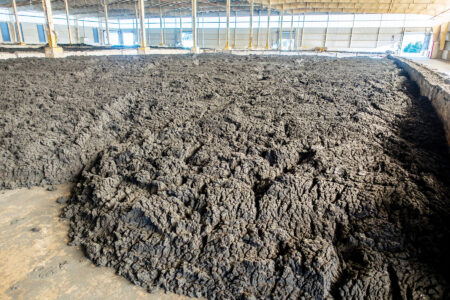
Biosolids could fertilize crops if we can safely manage PFAS and get over the “ick factor,” learn about biosolids fertilizer pros & cons.
For farmers and growers, the macronutrient nitrogen has achieved mythical status, and it’s critical for plant growth. Without enough of it, crop yields drop significantly; too much, and nitrogen can run off into waterways, poisoning ecosystems and creating harmful algal blooms. And while nitrogen is an abundant element on Earth, it requires an energy-intensive process reliant on natural gas to isolate plant-soluble forms we can mix into fertilizer. In an era of rising gas prices and disrupted supply chains, nitrogen is becoming increasingly difficult for farmers to rely on.
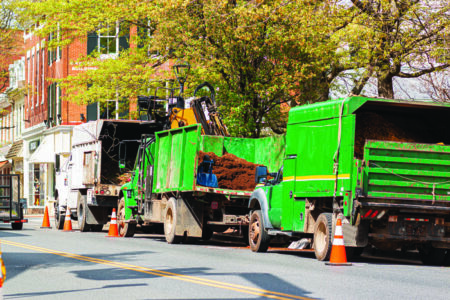
Meanwhile, flying somewhat under the radar, cities and towns have been testing a potential solution to the nitrogen puzzle for years now: sewage sludge. A growing number of municipal sewage-treatment plants now capitalize on human waste as a resource, rebranding sludge as “biosolids” and selling it – or giving it away – as fertilizer. Several counties and municipalities have invested in spreader trucks that will not only deliver biosolids to your farm, but will also spread it on your fields for you.
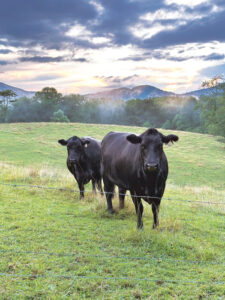
Biosolid fertilizers may have continued largely unnoticed if it weren’t for recent press related to the dangers of microplastics and per- and polyfluoroalkyl substances, or “PFAS,” in the sludge, including the Environmental Working Group reporting that millions of acres of U.S. farmland could be contaminated with PFAS from using biosolids for fertilizer. Now, several states are seeking to stop the practice of spreading biosolids. But if we can properly test biosolids to confirm their safety, do total bans cause us to miss out on a valuable source of “homegrown” nitrogen at a time when we need it most? To help me decide, I set out to evaluate biosolids’ risks and benefits.
Manure’s Place in the Nitrogen Cycle
Like the water cycle and the carbon cycle, our planet also has a nitrogen cycle that moves this key macronutrient required for plants to grow. The atmosphere is 78 percent nitrogen, but plants can’t use this nitrogen directly. Microbes in the soil capture, or “fix,” nitrogen into a form that plants can absorb. Plant-eating animals return nitrogen to the soil in the form of manure.
Humans have used animal manure and “humanure” to fertilize crops for millennia. Some fields in China have been producing in the same space for over 1,000 years. To maintain fertility across generations, humans spread manures to enrich the soil with the “big three” macronutrients: nitrogen, phosphorus, and potassium. But manure also contains important micronutrients, including calcium, magnesium, and sulfur. Manure improves soil quality by increasing organic matter, improving soil structure and water-holding capacity, decreasing compaction, neutralizing acidity, and promoting beneficial soil organisms.
On my farm in western North Carolina, I use cow manure to fertilize 12 acres of dent corn that feeds the neighbors’ dairy cattle, and I use pelletized chicken manure on my pastures, hay fields, and vegetable crops. But many large-scale cattle feedlots are sited far from the farms that grow our food. Nitrogen is trucked to farms in Illinois, Iowa, and other Corn Belt states to grow corn and soybeans – that are then trucked to massive feedlots; for instance, in Kansas and Texas. Because hauling heavy manure to farm fields everywhere would be prohibitively expensive, humans have come to rely on less-bulky synthetic fertilizers shipped by boat, barge, and train to fertilize farm fields. In other words, the global nitrogen cycle – at least in its preindustrial form – has largely broken.
The Geopolitics of Fertilizer
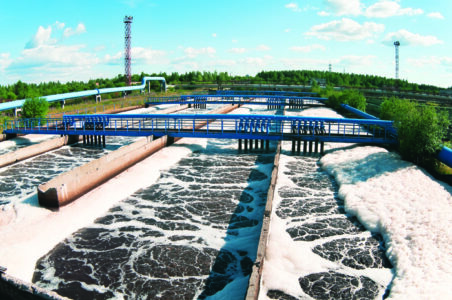
Humans began to disrupt the normal nitrogen cycle in the early 20th century, when we started producing millions of tons of synthetic nitrogen fertilizers using the fossil-fuel-intensive Haber-Bosch process. The process converts atmospheric nitrogen and hydrogen into ammonia, a “synthetic nitrogen” that plants can use. Today, about 120 million tons of synthetic-nitrogen fertilizer gets used on farms globally each year. In the U.S., farmers apply about 12 million tons to the land annually, importing about half from other countries. That’s a lot of fertilizer; so much that it leads to nitrogen overload in fields, algal blooms in rivers, and dead zones in lakes and other waterways. Some scientists refer to us living through a “nitrogen crisis.”
Food security is at stake as well. By the 1980s, the United States was the largest exporter of nitrogen, but it’s now the largest importer, mainly because of cheaper natural gas (used for manufacturing it) available in other countries. Some estimates show that more than half the synthetic fertilizer applied to farmland is wasted through runoff, soil erosion, and nitrate leaching into the atmosphere. As harmful as nitrogen overload can be, scientists agree that without synthetic nitrogen, half the human population wouldn’t be here; agriculture simply couldn’t have supported the doubling of world population in the past 60 years without it.
So, rather than bemoan all the nitrogen we have, we should instead use it smarter. Precision agriculture can help alleviate some of the nitrogen problem, including through soil testing and variable-rate application of fertilizer, giving plants just enough for proper growth and keeping a lot of the excess from running off into waterways. Cover crops, no-till, and crop rotations with legumes (naturally nitrogen-fixing plants) can also help. By applying nitrogen in precise amounts, we’d reduce our reliance on foreign imports and save a lot of money.
Human Waste = Plant Food
If using human waste as fertilizer strikes you as taboo, what if it came to you in the form of sanitized, safe-to-handle pellets, similar to the pelletized chicken manure you might already use in your fields? I certainly understand the “ick factor” some people will feel, but you may already be using biosolids in your yard without realizing it.
Milorganite brand fertilizer, sold at major outlets, including Home Depot and Walmart, is composed of treated and pelletized biosolids that have been distributed by the Milwaukee Metropolitan Sewerage District since 1926 (the brand’s name is a portmanteau for “Milwaukee Organic Nitrogen”). The slow-release fertilizer has an N-P-K ratio of 6-4-0 and has been heated to 900 degrees to kill pathogens. Even those with an ick factor too strong to spread Milorganite on crops may be open to using it on sod farms, tree farms, or flower gardens.
Most cities around the country have a ready-made wastewater-collection system in place, constituting 1.3 million miles of public and private sewer pipes and treatment infrastructure that separates biosolids from liquids and other inorganic waste. For its part, the federal government has encouraged U.S. farmers to spread municipal biosolids onto millions of acres of farmland for several decades. These promotions have kept the stuff out of landfills, and treatment facilities in rural areas are already nearer to farmland ready to accept nutrient-rich biosolids.
I’ve been thinking a lot about biosolids’ value for growing corn, in particular. Ethanol that goes into our gas tanks uses up to 40 percent of the U.S. corn harvest. Livestock feed takes another 40 percent. Large cities in the heart of the Corn Belt, such as Chicago, might produce enough biosolids to make a real contribution.
Risky Business
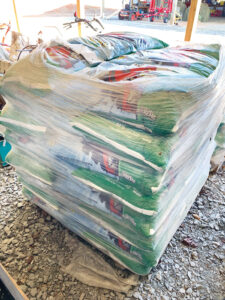
Recent research has shown evidence that PFAS and microplastics can turn up in farm fields and pastures where biosolids have been spread, particularly where the practice has been ongoing for decades. Note that the temperatures used to kill pathogens in biosolid pellets don’t destroy PFAS, which can be absorbed into plant material from the soil and then consumed by humans and animals. These “forever chemicals” are so pervasive they’ve even been detected in the bodies of polar bears.
The Environmental Protection Agency (EPA) offers no definitive guidance for remediation of the problem of PFAS soil contamination. While the EPA regulates pathogens and heavy metals in sewage fertilizer, PFAS contamination is less regulated, despite studies showing some of these chemicals increase the risk of cancer and birth defects. The risks have led a few states to ban the practice of spreading biosolids. The first to do so, Maine, has set up a fund to reimburse farmers for the loss of farmland and harm to their businesses due to contamination from PFAS.
The EPA and fertilizer companies marketing to Big Ag, including Synagro Technologies, face lawsuits. Companies claim they’re not the source of PFAS, which came from homes, industries, and all the pipes upstream from the municipal systems they source from (which is technically true). But while it’s difficult to pinpoint the actual source of PFAS or microplastic contamination in a large sewer system, plaintiffs assert the industry should bear some blame for not testing their source material.
Larger municipal wastewater-treatment facilities, especially those servicing a large industrial base, seem to be more at risk of PFAS contamination than smaller facilities. More and more water plants are testing for PFAS and heavy-metal contamination in their intake and outgoing pipes, and many municipal systems monitor the private operations that send water to their treatment plant. Plants may ask companies to pretreat wastewater before it leaves a facility and face penalties if the effluent falls out of compliance.
New Dryer Technology
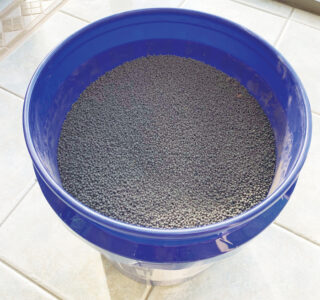
Hendersonville and Asheville, two towns near my farm in North Carolina, have considered or purchased thermal dryer systems to dry sludge and produce pellets the municipalities could give to farmers. The economics work out, because the equipment ultimately saves treatment facilities tens of thousands of dollars in hauling and landfill costs. (Drying sludge to remove water greatly reduces its bulk, weight, and, therefore, cost to transport.) The heat in the drying process also kills most bacteria and pathogens, so the output is harmless, dark-colored pellets. Hendersonville’s project includes a rooftop photovoltaic solar energy system that aims to offset most of the new equipment’s electrical demands. But the Asheville facility is concerned about whether enough demand exists for the finished product in its mountainous terrain, with fewer farms in the immediate vicinity. If the several tons of daily supply can’t be moved out, it’ll go to a landfill.
Could there be an additional option? My thinking is the market seems right for an ag-supply or even trucking company to grab that free, high-value nitrogen and haul it over to the Corn Belt. Common fertilizers used on cornfields have an N-P-K ratio of 20-10-10, meaning 20 percent nitrogen per ton. Compare that with biosolids’ 6-4-0 ratio – three times as much nitrogen per ton! My pastures and cornfields would likely require about 1 ton per acre of dried biosolids versus 600 pounds of standard fertilizers. As an economically sound business proposition, the closer the treatment facility is to a field, the better, but the math potentially works out to cross a state line or two. Alternatively, if we have the technology to dry and transport biosolids, perhaps we should explore its use with livestock manure, which doesn’t have the same widespread PFAS contamination concerns.
Boon or Bane?
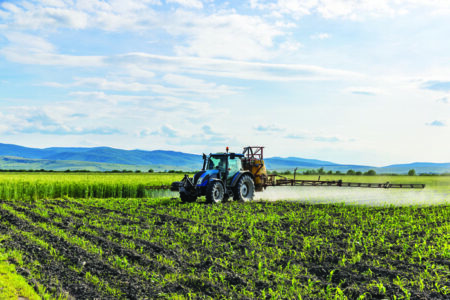
Will the threat of PFAS kill what could be a viable and sustainable source of nitrogen? Testing will be critical, as well as labels that show not only N-P-K, but also everything else that’s in biosolids before fertilizers get distributed to farmers. Critically, the temperatures in current thermal drying systems for biosolids don’t destroy PFAS. New technologies on the horizon might be able to remove PFAS from city water and waste systems, but aren’t available yet.
I’m not saying sludge can completely solve our nitrogen needs – but it’s a start. With the right systems in place, and ever-growing nitrogen needs, it seems to me tested and labeled sludge is a solution we shouldn’t immediately poo-poo.
Robert Turner is a science writer focused on food and farming, environmental science, and new technologies that improve food security, food sovereignty, and community resilience. He owns and operates an organic farm in the mountains of western North Carolina.
Originally published in the October/November 2025 issue of MOTHER EARTH NEWS and regularly vetted for accuracy.





